Showing posts with label Advocacy. Show all posts

Tuesday, March 22, 2016

The Sad Ballad of SB 346

Earlier this year, state representatives proposed SB 346 ~ a bill that would alter the definition of a "governmental action" in the Georgia Environmental Policy Act (or GEPA) to exclude transportation improvements that "do not exceed $100 million in costs" ~ this is virtually every project, by the way ~ on the basis that "such project[s] shall not constitute a proposed governmental action which may significantly adversely affect the quality of the environment and the requirements." 

As a preservation planner working for the state, this was clearly an absurd notion. First and foremost, this would eliminate any form of screening for historic and archaeological sites, including unmarked burials, on essentially every state-funded transportation project in Georgia. Second, how does the cost of a project ~ especially when it is absurdly high ~ have anything to do with its potential to adversely impact the environment ~ cultural or natural? It would also significantly reduce the opportunities for work in the private sector of cultural resource management in Georgia.  

Area archaeologists, including members of SEAC and the Society for Georgia Archaeology, mounted an effort against the bill resulting in an amendment to address concerns over cultural resources. That amendment states "that an environmental evaluation shall be considered in the decision-making process, consistent with paragraph (3) of Code Section 12-16-2 [this is from GEPA, it just states that ‘Environmental evaluations should be a part of the decision-making processes of the state’], when it is probable to expect significant adverse impact on historical sites or buildings and cultural resources.” This is problematic ~ I will get to why that is a little later...

SB 346 was passed this morning. Two representatives spoke in favor ~ including the chair of the House Natural Resources & Environment Committee, Lynn Smith. Paraphrasing Smith, she asked if it is true that this will not allow GDOT to "ignore" architectural or archaeological resources? She stumbled over those words a bit, so it is possible she may have only been referring to archaeological resources and misspoke about architecture. Another representative with concerns over coastal heritage, spoke of how “well-vetted” this bill has been.  

Representative Sam Watson, who introduced the bill today, described it as potentially shaving 6-8 months off the life of each project. To put this into perspective, a fast transportation project from proposal to construction may take three years. 22 nays were overwhelmed by 146 proponents. Georgia’s representatives have spoken and their words reflect the state of historic preservation in Georgia: uninformed and leaderless. 

There is little doubt that those who rose to speak of cultural resources in the House today had the best of intentions, but even they demonstrated a fundamental lack of understanding of the law they voted to circumvent. Smith’s question ~ if asked, genuinely unaware of the answer ~ demonstrated an unfounded confidence in the knowledge of Representatives Beach, Mullis, and Watson, about the GEPA process, transportation planning, in general, and how cultural resources currently are and would be accounted for in project planning. There was no follow-up ~ Watson confirmed that GDOT will not be able to “ignore” cultural resources and she accepted his assertion.

There was no deception here. The individual presenting the bill even stated that this was on the heels of HB 170 (the Tranportation Funding Act of 2015) ~ a bill providing an excess of a billion dollars of transportation funding through the state, which eliminates federal involvement on the majority of those projects, and thus, circumventing Section 106 of the National Historic Preservation Act. Section 106 is arguably the single most important piece of legislation in preservation planning. While it may be another toothless law, it defines and mandates preservation planning itself. In less than a year, the State of Georgia has effectively circumvented the National Historic Preservation Act, Section 4(f) of the US Department of Transportation Act (which has teeth), and GEPA. Our sole consolation is the promise of an undefined process to consider cultural resources.

Speaking of that process, let's revisit that amendment: it references a vague, very base-level statement, taken directly from GEPA, that cultural resources will be considered when a significant adverse impact is expected. It’s an empty concession; the process remains undefined and it is unclear who would define it. Also, who decides when a “significant adverse impact” is probable? Would it be a coalition between the cultural resource specialists at GDOT and the Historic Preservation Division, as it has been, or will this be decided by a coalition of project managers and engineers without the expertise to anticipate these sorts of impacts? 

As I strain to deny myself the cynicism that feels so natural in this moment, we must face the unsettling fact that this bill was proposed to circumvent a simplified environmental process ~ those of us who work with GEPA understand, there is very little you can strip away from it. It is simply hard to imagine many seats at that table for preservationists or archaeologists. SB 346 included no measures for accountability, no checks and balances between agencies to ensure quality compliance.

The sad reality is that maybe this bill was well-vetted, but not by the right people. We are fortunate that Georgia archaeologists championed this cause, because without their effort, there would have been no legal protection for resources in the path of a billion dollars in transportation improvements.  The common defense of this bill was that numerous other legislation in place would account for environmental impacts. With the exception of known cemeteries, the only law for cultural resources is GEPA. Once more, the proponents of this bill fail to recognize that the environment includes more than our natural resources; it includes the built environment, historic landscapes, and trace elements of past lives that exist beneath the soil. 

So, while a mystery process is better than no process at all, that small success should be tempered by the loss of the fairly simple and effective process that was already in place. The indeterminate "they" will now proceed to revise a law they don't understand with the express purpose of shaving 6-8 months off project delivery at GDOT, which is unlikely to happen regardless. The State of Georgia breathes new life into the old cliché of the blind-leading-the-blind

So, here we are. How do you feel about it? If you are reading this, you must have some stake in historic preservation; if you stuck with me this far, you must really, genuinely care. I have shrugged off too many frustrations of late. I am pissed and disheartened. 

I am pissed, because this is important. This is too flipping important to have been developed and vetted by persons who lack any experience whatsoever with environmental compliance for cultural resources. I am pissed that representatives, whose interest is in transportation, were able to easily and effectively circumvent environmental legislation that should not have been in their purview. Did anyone else notice that the bill refers to "historical sites" ~ historical?! It is 2016 and virtually every person I encounter on the street ~ in all corners of Georgia ~ still believes that the "National Registry of Historical Places" is actually a thing and that it prevents property owners from making any changes whatsoever to their homes. It is clear that education about historic preservation is needed at all levels in this state. 

I am disheartened because more and more I am beginning to see my passion and profession reduced to the misunderstood nuisance that naysayers have always claimed it to be, and I feel powerless to combat it; that state representatives are undermining laws that they lack the professional vocabulary to properly discuss; and that the collective constituency to which I belong lacks the influence or presence to even be recognized as anything more than an interest group on this matter. But more than anything else, I feel responsible, because I did not do more to fight it ~ in the two months it has been presented and, more importantly, in the years before it was even an idea. We couldn't win this fight, because it was lost before it began. There was no concept of a resistance to it ~ no concern over combative agencies, no fear of public outcry in the media, or the retaliation of angry voters. Our voice was limited to 22 nays. 

I have a young son, a stressful job, other interests and commitments, and personal issues like everyone else that affords little time and energy to be a leader on something that is so dear to my heart. I imagine you could cut and paste that last sentence and apply it to nearly every preservation professional I know in Georgia. This is an exhaustive effort. Atlanta preservationists have experienced some recent successes in being heard and combating passive efforts to demolish local landmarks. How can we ~ a sea of passionate part-timers ~ expand this to the state at large? The effort to remain good stewards in the face of SB 346 will be carried on by qualified professionals in the state, I assure you; but the question is, what do we do now that this fight is over? 
~MRK

Friday, July 19, 2013

John B. Gordon School to Meet the Wrecking Ball


Part I - Background and History


John B. Gordon School. Courtesy of abandonedatlanta.com

Located in the heart of East Atlanta Village, and in the hearts of hundreds of its former students, the John B. Gordon Elementary School has sat vacant since 1995. In June of 2012, East Atlanta Patch reported that the property had been purchased by Paces Properties. The building is to be demolished and a 125 to 145 unit apartment complex built in its place. A relatively brief moment of hope for the building came in the form of a year-long demolition moratorium after the results of the 2008 South Moreland Avenue Livable Centers Initiative (LCI) were being contemplated by the city of Atlanta. This past May the moratorium was lifted and plans for the apartment complex are now moving forward.

Originally built between 1909-10 as the East Atlanta School, the Battle & Barili designed building was expanded in 1934 under the New Deal era Civil Works Administration (CWA).

Photograph of participants in class play at John B. Gordon Elementary School, Atlanta, Fulton County, Georgia, 1936. Vanishing Georgia, Georgia Division of Archives and History, Office of Secretary of State.

According to several sources, the school building was purchased sometime in the late 1990s by Inman Park Properties to be repurposed into lofts, a popular development proposal at the time with the Kirkwood School Lofts, Bass High School Lofts, and the Highland School Lofts all having been converted around the same time. Inman Park Properties, however, never managed to get anything done and the property sat vacant and abandoned for years, slowly shedding plaster from its walls. Inman Park Properties eventually went bankrupt, leaving behind the Gordon School and many other deteriorating historic buildings all around Atlanta.

Today, the John B. Gordon School looks like this:

Auditorium/Gymnasium. Courtesy of  abandonedatlanta.com
Second Story Music Room. Courtesy of phreakmonkey.com
Library. Courtesy of phreakmonkey.com
Stairwell. Courtesy of phreakmonkey.com
Auditorium/Gymnasium. Courtesy of phreakmonkey.com

Part II - The Rant


Perhaps the most encouraging part of this story is the bit about the Atlanta City Council imposing a demolition moratorium in the LCI study area in order to assess the findings, presumably to prevent development not in line with the LCI recommendations and the City's resulting policy decisions. For a full year, Paces Property had to sit on their pending contract to buy the Gordon School, and for a full year the preservation community could have weighed in on the proposal. Instead, and all too often, the preservation community was mute. Opportunities like that don't come along often.

Of course, the building may in fact be beyond repair, as the developer claims, but all too often structural integrity is the scapegoat for developers looking to save face when they want to demolish an old building. And why not? The photos above certainly tell a tale of failing roofs, deteriorating walls, rotten floors, and vandalization. Again though, and it bears repeating, the preservation community had a full year (and roughly 16 years prior to that) to show that the building was salvageable. A great example of a historic building thought to be beyond hope by most (non-historic) building professionals is the Constitution Building in downtown Atlanta, which, after a thorough engineering study, has now been determined structurally stable enough for rehabilitation. Developers are under no oath to tell the truth, so rather than take their word for it, the City and the folks tasked with protecting historic buildings should have been more proactive. Another option, of course, could have been local historic designation, which would have effectively prevented the building's demolition without a full structural report being reviewed by the Atlanta Urban Design Commission (or, at least, a petition from Paces for an economic hardship variance). At the very least, a blog post would have been a good start...

The more obvious gripe is the fact that the Gordon School was allowed to sit vacant for so many years in the first place. Public agencies like Atlanta Public Schools (APS) should be required to develop a management plan for decommissioned public buildings, as these are, after all, public property and by sitting vacant, result in lost tax revenue, opportunity costs, ancillary costs, and various socio-cultural costs. Vacant, deteriorating buildings (and vacant 'speculation' lots) are urban diseases and do far more harm than simply allowing demolition by neglect. Not only should public agencies be held responsible (I'm talking to you again, APS, and your failure to appropriately deal with the historic Howard High School), but developers like Inman Park Properties, who sat on the historic Gordon School, letting it deteriorate for years, should be taxed or fined. Philadelphia was working on a program that would do this and Atlanta recently approved a registration fee for vacant properties, but to really force developers to either do something productive or move on, the fees need to be steep and enforced.

Friday, July 12, 2013

The Pratt-Pullman

The Pratt Engineering/Pullman Company property is a historic industrial complex located in the Kirkwood neighborhood of Atlanta (here). Construction of the first buildings began in 1904, followed by a second building campaign when the Pullman Company bought the property in 1926. The site is currently owned by the state of Georgia and has been abandoned since 1996.


Roswell, 1920. Great Oaks located on Mimosa Boulevard
was built in 1842 as the home of Reverend and Mrs.
Nathaniel Alpheus Pratt
Its difficult to write about Nathaniel Palmer Pratt, founder of the N.P. Pratt Laboratory (predecessor to Pratt Engineering and Machine Company), without first writing about his father and his grandfather. The senior Nathaniel Alpheus Pratt (b.1796-d.1879) was a well-to-do Presbyterian minister from Connecticut. N. A. Pratt senior was also the son-in-law of Roswell King, founder of the city of Roswell Georgia. King brought Pratt, a graduate of Yale and Princeton's school of divinity and fellow resident of Darien Georgia, to the new town of Roswell to take charge of the Roswell Presbyterian Church, of which he did from 1840 until his death in 1879. In 1842, N.A. Pratt built 'Great Oaks' in Roswell, pictured at right.


Doctor Nathaniel Alpheus Pratt (b.1834-d.1906), son of a preacher man, was born in Darien and raised in Roswell. He studied chemistry and engineering at Harvard and was considered to have a brilliant mind for science; "His mind received and retained impressions as a piece of wax and his information upon all scientific subjects was marvelous" (Men of Mark in Georgia, Vol. V, 1910). His reputation in chemistry led him to become an adviser in the sourcing and production of gunpowder for the confederacy during the American Civil War . Following the war, Dr Pratt began a long and lucrative career of establishing chemical fertilizer plants all over the south. He was also an inventor, credited with patents on several chemical processes and a Geologist, mapping mineral deposits all over the south. Dr. Pratt was a bit of a nomad, living all over the southeast, from Florida to Virginia, but lived out his final years in Decatur, Georgia - where, in 1906, he was struck and killed by a Georgia Railroad train.

One of Pratt's first patents, this one of
the "process of and apparatus for making
sulfuric acid, September 1895.
Nathaniel Palmer Pratt (b.1858-d.1942), son of the renowned 'man of science', was born in Milledgeville, Georgia, the capital of Georgia at the time. In 1878 he graduated from Washington & Lee University, just two years after his father resigned from the position of chair of applied science. N.P. Pratt was a chemist and engineer, and also like his father, was ambitious and an entrepreneur; He founded the NP Pratt Laboratory in 1879, at the age of 21. Of course, it would take another decade or so for the NP Pratt Laboratory to engage in any serious work - biographies of N. P. Pratt suggest that his company was not founded until 1890. By 1900, he held at least a half-dozen patents for the manufacture and production of various chemicals, including sulfuric acid, his patent of which became the worldwide standard for many years. According to Drugs and Pharmacy in the Life of Georgia, 1733-1959, Pratt Laboratory was one of the first to manufacture and sell liquid carbon dioxide, which would be used in the newly popular soda fountains. This connection to soda would result in a very successful career for Pratt's cousin William Pratt Heath, who was Pratt's chief chemist for many years, and would later go on to work for Coca Cola.


N.P. Pratt Laboratory, from American Fertilizer, 1899


In 1898 N.P. Pratt Laboratory bought Fulton Foundry and Machine Company, which had a plant located at 490 Marietta street and also with offices in New York City. Presumably, Pratt realized that he could not only patent chemical processes and apparatuses, but could manufacture and sell the machinery used in these processes as well. A year later, in 1899, N.P. Pratt Laboratory built offices and a laboratory at 90 Auburn Avenue (corner of Courtland) in Atlanta. The two story, stone and pressed brick building cost roughly $18,000. It was designed by Godfrey L. Norman (one-time business partner to Neel Reid and Hal Hentz, and replaced by Rudolph Adler after his death) to be able to take an additional two stories if needed (American Fertilizer, Vol. X, No. 1, Jan. 1899), though whether this happened is unknown as the building, unsurprisingly, is no longer extant.


Image from Atlanta Constitution, June 6, 1906
In 1904, Pratt began construction on a state-of-the-art facility in the newly incorporated hamlet of Kirkwood, just south of the Georgia Railroad tracks, between Atlanta and Decatur. Kirkwood at the turn of the century consisted of not much more than a collection of fine estate homes, a post office, a fire station, and a couple of general stores. The area was easily accessible by two trolley lines, and with this new employer, this would help precipitate a swift residential building boom, filling out most of the neighborhood with Craftsman style bungalows.


Image from Louisiana Planter, 1907


Announcement from American Fertilizer,
Vol. 30, Jan. 1909

Sometime in 1908 or 1909, Pratt Engineering and Machine Company was formed. It is unclear what transpired here, but it appears that Pratt Engineering & Machine Co. was spun off of the engineering department of N.P Pratt Laboratory. N. P. Pratt and George L. Pratt (for whom much of the design credit for the new facility is due) continued to manage the Kirkwood factory. Notorious businessmen, Joel Hurt and George F. Hurt had a hand in this deal and became directors of the new company. Both companies continued to operate in tandem for another decade or so (Joel Hurt papers, G.F. Hurt biography, American Fertilizer, Vol. 30, Jan. 1909). 

Pratt Engineering (and, prior to 1909, Pratt Laboratory) not only produced manufacturing equipment, but also built dozens of complete factories around the state, country, and world, including factories in Cuba, Puerto Rico, and Brazil. Machines were constructed onsite at the Kirkwood location, assembled and tested as a complete production facility, then disassembled and loaded onto train cars for shipment to their final destinations.


C. 1910 sketch of Pratt Engineering and Machine Co., source unknown


Briefly during World War I, the plant was used for the production of munitions. Though the details of this work are unknown, it was not an uncommon practice at the time. Franklin Garret notes in his seminal work on the history of Atlanta, that Pratt Engineering gave its employees the remainder of the day off on the morning the armistice was announced. Though it would appear that business was booming, shortly after the War N.P. Pratt Laboratory and the Pratt Engineering and Machine Company were liquidated. Portions of the lab were sold to former NP Pratt Laboratory employees to form Brogdon-Dumas Laboratories (Chemical Age, 1919 and Chemical & Metallurgical Engineering, 1920). The remainder of NP Pratt Laboratory was sold to Coca Cola, who at the same time bought out William Pratt Heath's start-up, Crystal Carbonic. Heath went on to become one of Coca Cola's chief chemists. It is rumored that Earnest Woodruff, who bought out Coca-Cola in 1919, negotiated these deals, perhaps incorporating from Pratt their successful carbonic gas manufacturing and analysis and dropping the remainder to streamline business. 

1927-1930 topographic map
What became of Pratt Engineering is not known, but the Kirkwood facility was eventually bought by the Pullman Company in 1926. The site was purchased for around $250,000 with another $1.25 million in renovation/construction costs (Atlanta Constitution, Aug. 12, 1927). Two large saw-toothed buildings were constructed at this time, as well as the innovative transfer table, which allowed workers to moved train cars laterally down the production line, saving space and time and allowing all work to go on concurrently.

The Pullman's "Atlanta Shops", were one of several repair and maintenance facilities strategically located around the United States. As with Pratt, Pullman was a major employer for the local community of Kirkwood, which was incorporated into the City of Atlanta in 1926. In 1954, facing declining passenger train use, Pullman began closing its ancillary facilities. The company went bankrupt in 1969.


Aerial Image, date unknown (1960s)
From 1955 to well into the 1970s, Southern Iron and Equipment Company, manufacturer of train locomotives and train parts, operated a train repair and manufacturing facility at the site. Southern Iron changed its name to U.S. Railway Manufacturing Co. and then to Evans Railcar Division of the Evans Products Co. Several prefab metal buildings and sheds were installed during this time.

After a decade of abandonment, the state of Georgia bought the site in 1990 for $1.66 million and began running the New Georgia Railroad, a tourist and dinner train running from Atlanta Underground to Stone Mountain. The Pratt-Pullman site was used for equipment storage and maintenance.


C. 1992
The New Georgia Railroad went belly up in just a few years later and the site has been vacant since. Though used briefly in the late 1990s for storage and occasionally rented out to movie production crews, the site has seen the most use by graffiti artists and urban explorers.

In 2001, the Pratt-Pullman site was placed on the Atlanta Preservation Center's endangered places list and in 2009 the Kirkwood neighborhood, including the Pratt-Pullman site, was placed on the National Register of Historic Places.


For more information and to get involved in this site's preservation, please visit the SAVE Pratt Pullman Facebook page.

Thursday, February 21, 2013

Demolition of I.M Pei's Gulf Oil Building


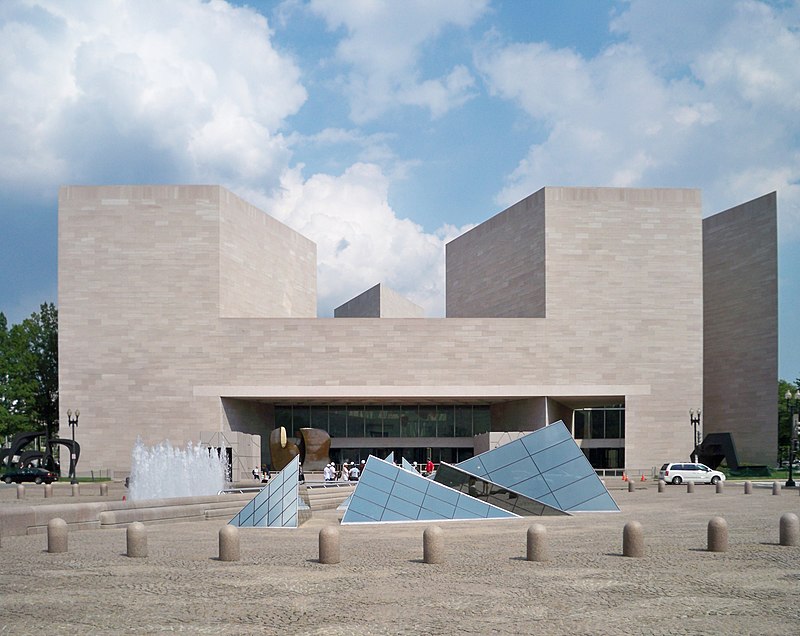
I.M Pei, a renowned architect of the 20th century, is known most, perhaps, for his design of the glass pyramid in the courtyard of the Louvre (and the visitor's center below it),


Society Hill Towers in Philadelphia,


The Johnson Museum at Cornell University,


or the East Building of the National Gallery of Art,


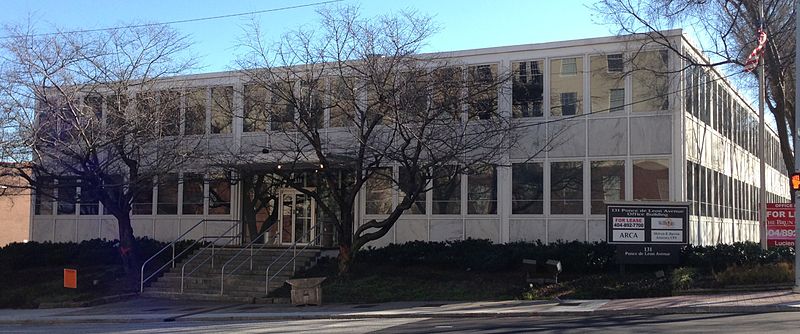
Of course, an architect's first building, is often most memorable to the architect themselves - and certainly an integral part of the architect's biography. Pei's first building was built in Atlanta in 1951:

"Pei finally saw his architecture come to life in 1949, when he designed a two-story corporate building for Gulf Oil in Atlanta, Georgia. His use of marble for the exterior curtain wall brought praise from the journal Architectural Forum."

The building was a very clear physical link between Pei and his mentors Walter Gropius and Marcel Breuer of the Bauhaus School of architecture; the building's clean lines, steel-frame with glass and marble walls, utilitarian floorplan, and recessed entry were hallmarks of the "International Style". Pei's subsequent designs reflected much more of his own unique style, dominated by glass curtain walls and cubist forms.


Unfortunately, the Gulf Oil building is being demolished:


This represents another failure of the preservation community to effectively advocate for a very significant Atlanta building (along with the recent demolition of a Neil Reed designed apartment building on Peachtree Street, and the locally designated Hirsch Hall). The Atlanta Preservation Center (APC) reported on the proposed redevelopment of the site some months after the announcement came to the real estate and development world (they've since updated their page). The APC deserve some credit, however, for their tireless advocacy work in support of the Crum and Forster Building on the Georgia Tech campus - which, of course, is still going to be demolished. I can't blame them too much, as I had no idea Atlanta even had an I.M. Pei building (had three, in fact, and two still stand - at least, two that his firm designed), and I certainly did not know it was his first. 

The developers claim that the building would be carefully disassembled to be reconstructed later. Though parts may have been salvaged (like the marble panels), based on the above demolition photos and the below rendering, it will clearly be nothing more than a facadectomy...

Rendering of proposed development. Gulf Oil facade in foreground.